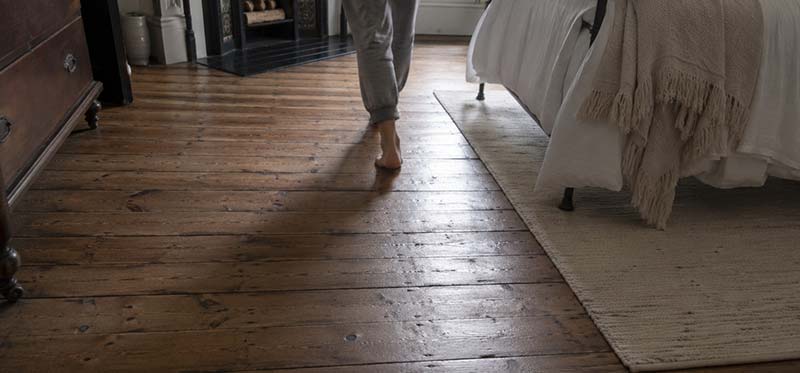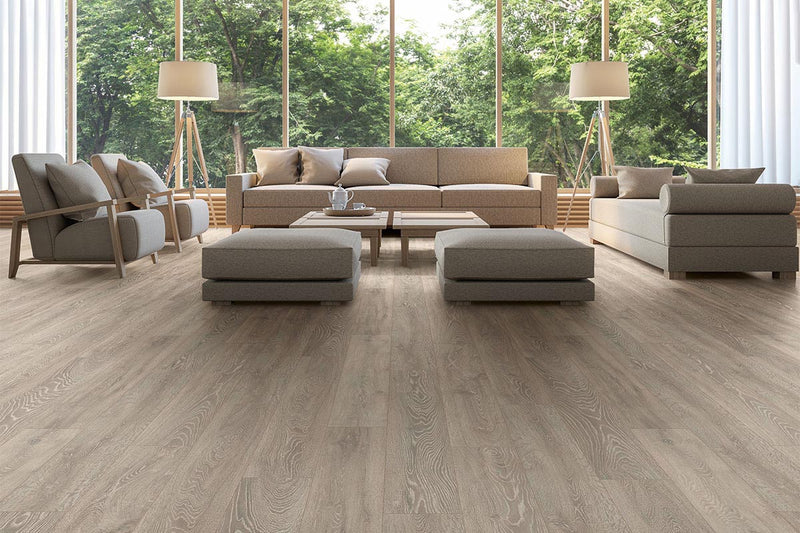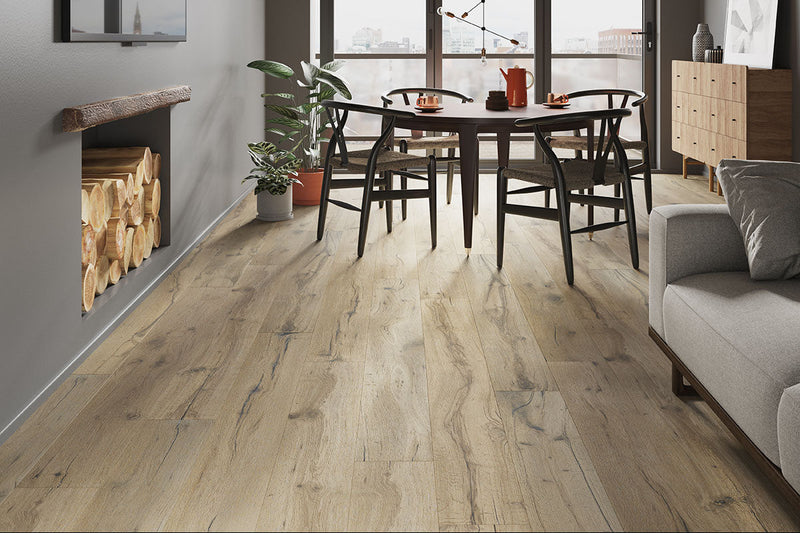



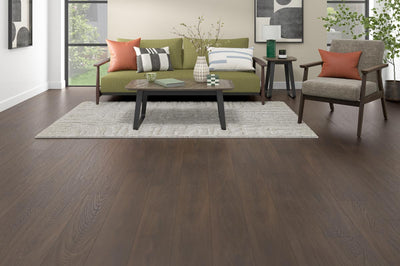

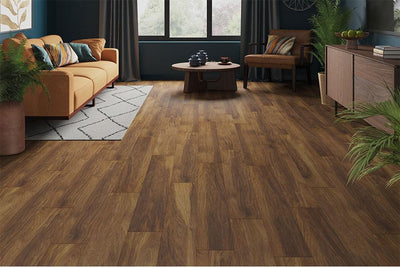

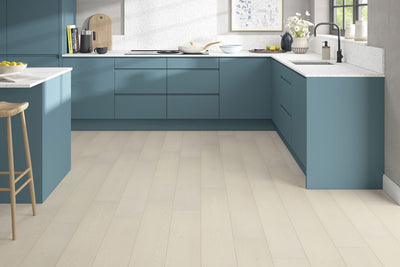

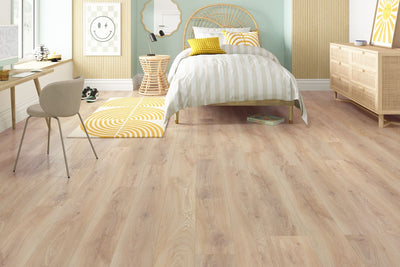


Wood flooring is a popular choice for many homeowners because of its warm and welcoming aesthetic. With options featuring rustic knots and grains, and shades ranging from warm oaks to distressed naturals, there’s a wood floor style for every home.
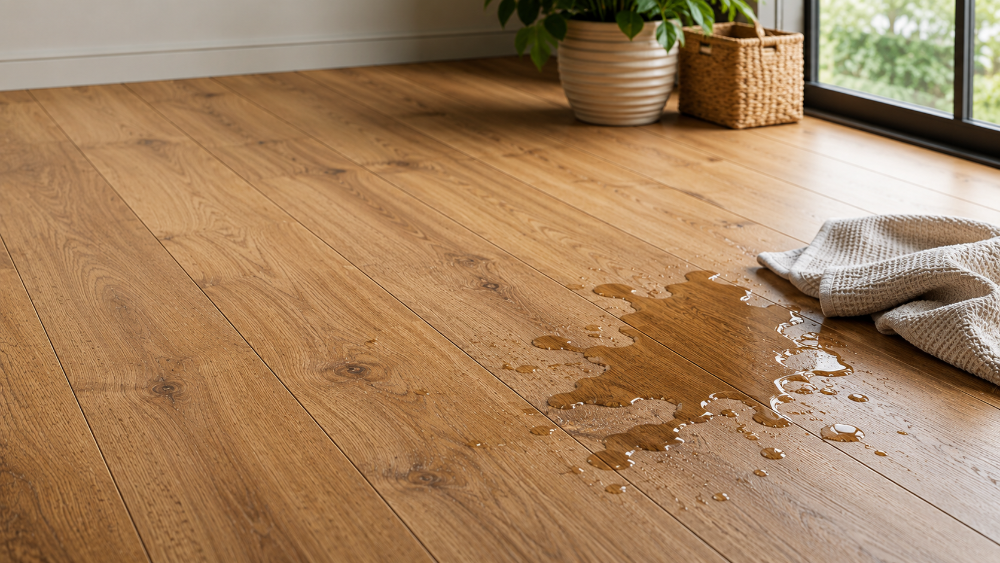
No matter how careful we are, water stains can sometimes appear on even the toughest wood floors. Water marks on hardwood floors can ruin the appearance of your home, but knowing how to remove water stains from wood is key to maintaining your flooring’s beauty.
If you’re looking for how to remove water spots from wood effectively, follow these easy DIY steps.
When water seeps into wood, it can cause the fibers to swell and darken, creating visible stains. The severity of the stain depends on factors like the type of wood, how long the water sits, and the quality of the floor’s finish.
Types of Water Stains on Wood Flooring
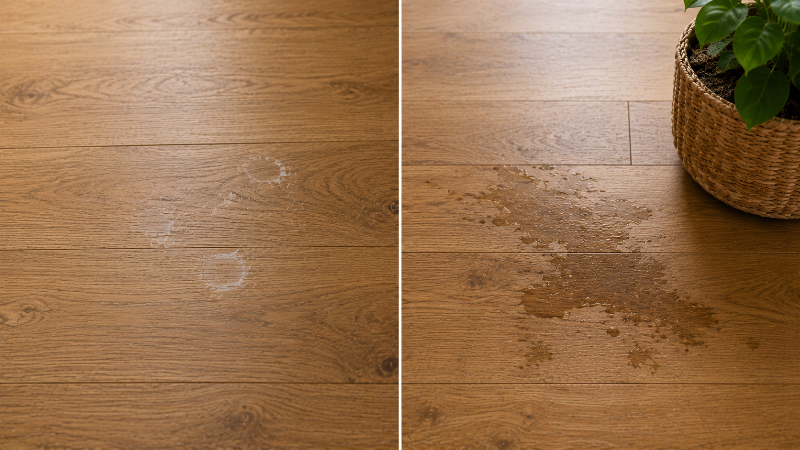
There are two common types of watermarks on hardwood floors.
1. White Stains – these usually only affect the top-level of the flooring finish.
2. Black Stains – these are darker and suggest deeper penetration of the wood beneath the finish or lacquer.
How to Remove Water Stains from Wood Flooring Effectively
Removing White Water Stains from Wood
Surface-level water stains, or 'white stains', have a smoky appearance and are usually easier to remove. UV lacquered floors offer greater resistance to this type of staining thanks to their protective finish, whereas oiled floors may absorb moisture more readily and can require a little more attention to maintain their appearance.
Removing a white-water stain from your wood floor might take a little trial and error, as every stain and floor is different. Here are a couple of easy ways to try and remove water spots from wood flooring:
Baking Soda Paste
This classic household trick uses ingredients you probably already have in your kitchen cupboards! Combine baking soda and water to make a thick paste.
Using a soft microfiber cloth, gently rub the paste gently into the stain, making sure to rub with the grain of wood.
If the stain is stubborn, try leaving the paste on for a few minutes before wiping it off. Repeat as necessary, allowing the area to dry between applications.
Mineral Oils
Mineral oils can be great for listing stains from the top layers of wood flooring.
Using a soft microfiber cloth, apply a thin layer of mineral oil to the water stain on your wood floor. Repeat this process, leaving five minutes between applications.
You should see whether the stain has faded within 24 hours.
Olive Oil and Vinegar
Here’s another easy tricky using kitchen staples! The vinegar helps to remove the stain, while the olive oil polishes the floor.
In a small bowl, mix equal parts of vinegar and olive oil. Apply the mixture to a soft cloth and rub the stain, again following the direction of the grain.
Once done, wipe the area clean with a dry cloth and leave it to fully dry.
Removing Black Water Stains from Wood
If a spill is left too long, water can seep deeper into the wood, creating black stains. These are more difficult to remove because the moisture has penetrated beneath the surface. UV lacquered wood flooring offers greater protection against deep water staining by slowing moisture penetration, although no real wood floor is completely immune if standing water is left untreated. Oiled wood floors may be more susceptible to black water marks if they are not regularly maintained. If you encounter black water marks, try these methods.
Sanding
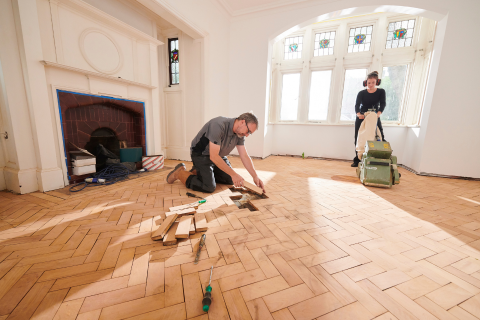
Start by masking off the area around the stain to protect the rest of the floor. Working with the grain, gently sand the area of the stain using a medium grit sandpaper (100-150 grit). If the stain is only surface deep, this should lift it.
Steel wool can be used to gently buff out the edges of the area, helping to blend into the original finish.
To blend the sanded area with the rest of the floor, use fine steel wool to gently
buff the edges. Once the stain is gone, apply a fresh coat of varnish or wax to match the rest of your floor
Bleach
If the water stain has penetrated too deeply, applying a thin layer of bleach can help lighten it. Use a toothbrush to gently apply bleach to the stain, working with the grain of the wood, and leave it for a few hours.
After the bleach has worked its magic, clean the area thoroughly with a damp sponge. To neutralise the bleach, apply a little vinegar and wipe it away with a damp cloth. Once the area is dry, apply a layer of oil or varnish to protect
the floor.
Tips for Preventing Future Water Stains on Wood Flooring
While you can’t predict when spills and stains might happen, here are a few easy ways to protect your beautiful wood floor.
Quick Cleanup
When you see a spill, clean it up right away. Acting quickly can help you avoid having to remove water spots from wood later on.
Use Mats
Place mats in high-traffic areas, near doorways, and under sinks to catch water and dirt before they reach your floors.
Regular Maintenance
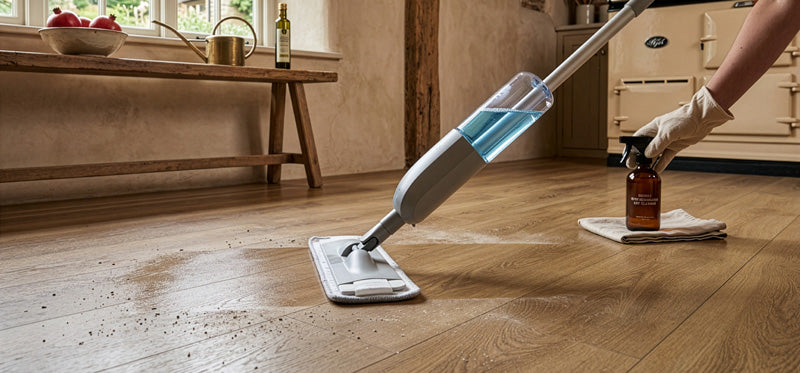
Keeping your floors clean and well-maintained with regular sweeping, damp mopping, and polishing will keep them looking brand new for years to come.
Choose the Right Floor for Your Room
Choosing the right flooring for each room is essential, especially in moisture-prone areas like kitchens, bathrooms and utility rooms. Whether you're looking for 100% waterproof LVT flooring or water-resistant laminate flooring with advanced splash protection, our collection offers stylish, durable solutions designed for every room in your home.