Kitchen Wood Flooring
Real wood flooring brings natural warmth and comfort to your kitchen, and with proper care, it can withstand the daily bustle of cooking, cleaning, and family gatherings. Choosing the right wood is the key to a floor that lasts.
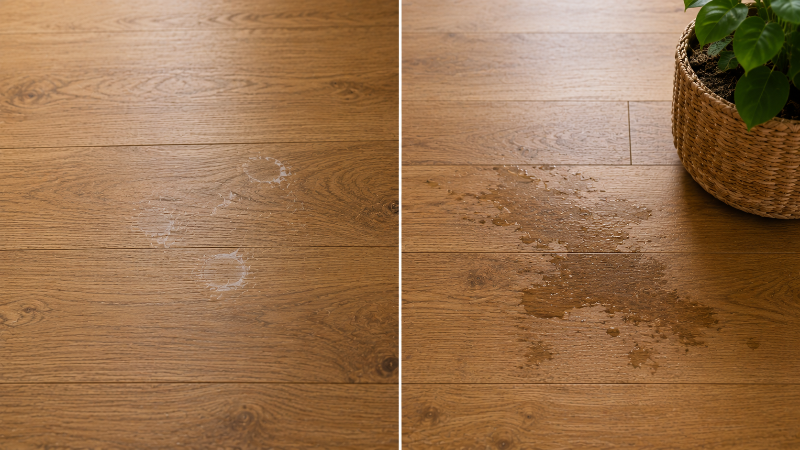
Selecting a strong, protective finish is important too. As well as retaining its shape amid heat, humidity and heavy foot traffic, a real wood kitchen floor also has to resist spills and splashes.
Our wide range of real wood floors features many suitable options for kitchens.
Browse our collection now or read on to find out what woods and finishes work best.
Why Real Wood in the Kitchen?
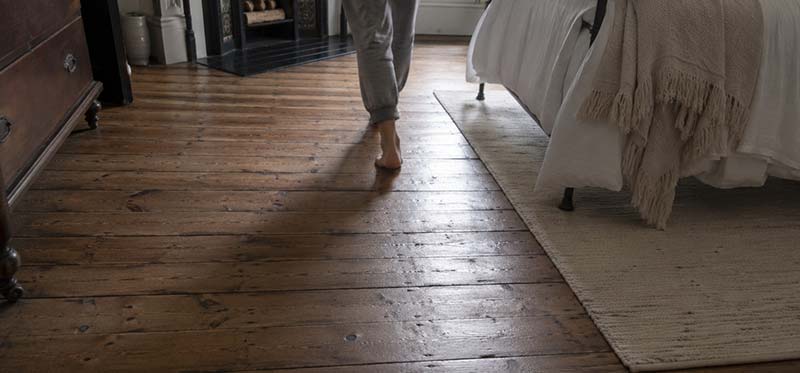
With its unique, intricate grain patterns, wood is naturally beautiful, and many people enjoy the look of hardwood in the kitchen especially. It helps create a warm, homely atmosphere in an environment where we often put function first.
You can even use wooden floors to extend the home into the kitchen, creating a continuous hardwood flow from other areas like the dining room and living room.
However, a wooden kitchen floor is not purely an aesthetic choice. It's easy on the feet and back during long periods of standing, which makes it ideal when cooking or washing up.
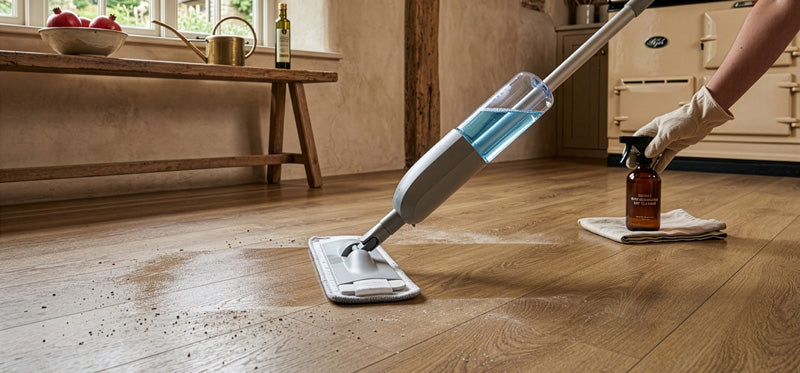
With a high-quality protective finish, it's easy to keep clean, too. This also prevents moisture damage and helps it handle everyday wear.
Material & Finish Considerations for Kitchens
Real wood flooring can be solid or engineered. Engineered wood places a hardwood surface on top of softwood and plywood layers, and this is the preferred choice for kitchens.
The reason why is that high temperatures and humidity don't make engineered wood move much because of its layered construction. You get an authentic wood look that's less prone to warping and wear, and one that's compatible with underfloor heating.
The thickness of the wood also matters, as does the finish. Deeper wear layers offer greater durability, and lacquered finishes provide plenty of protection from spills and drips for little effort. Oiled finishes look more natural but require more care.
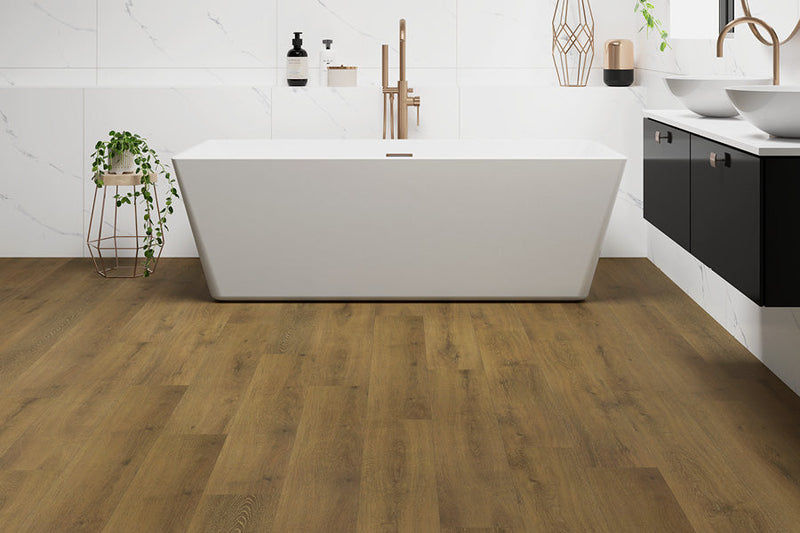
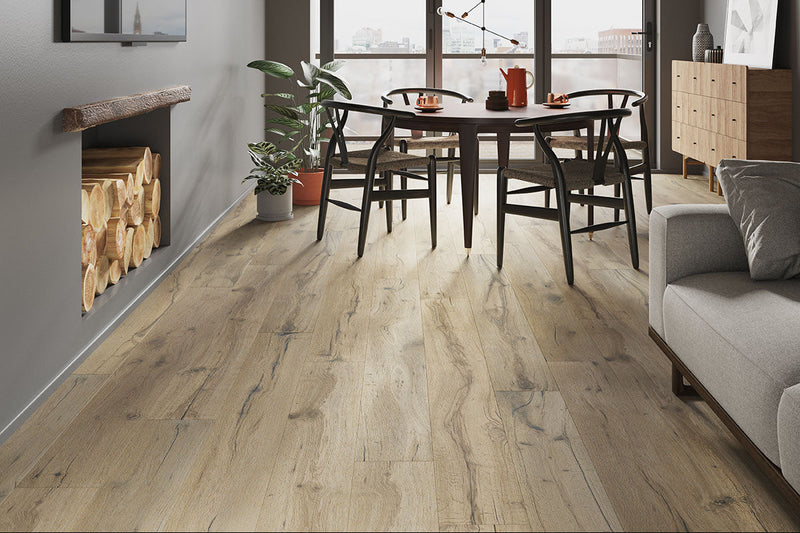
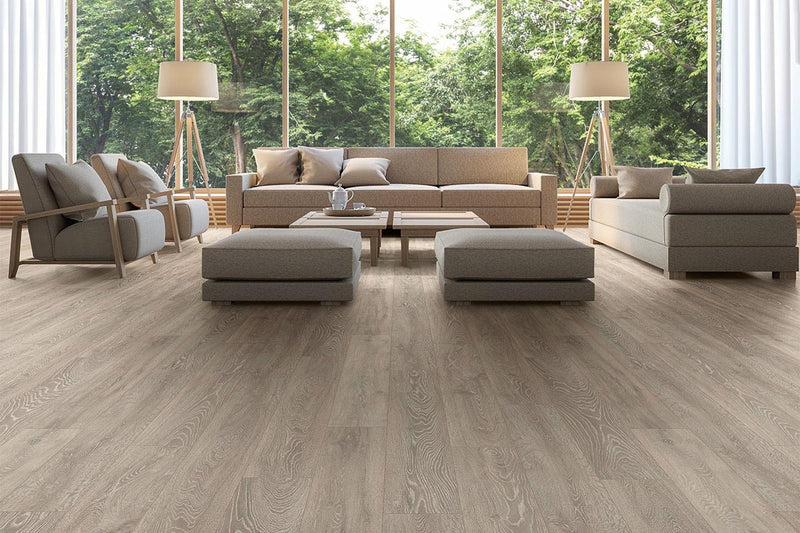
Our engineered wood floors are available in many colours to help you create your dream kitchen. Popular choices currently include light oak, which adds a rustic charm, grey for a thoroughly modern look, and whitewashed for a bright, airy space.
Installation in Kitchen Spaces
Careful preparation is the key to installing a real wood kitchen floor that lasts. Start by making sure the subfloor is level and dry, especially around the plumbing and appliances.
Wooden floors suit many other spaces, so you can extend the floor from your kitchen to create a seamless flow into the adjoining rooms. Otherwise, transition strips can help make the change of surface less abrupt.
After installation, keep the floor dry and consider placing mats in splash-prone areas, like around the sink.